Why SUM(DISTINCT amount) Is Not a General Fix for JOIN Double Counting
Learn why SUM(DISTINCT amount) can discard valid payments, how SQL deduplicates rows, and when to use payment identity, EXISTS, or explicit allocation.

Learn why SUM(DISTINCT amount) can discard valid payments, how SQL deduplicates rows, and when to use payment identity, EXISTS, or explicit allocation.
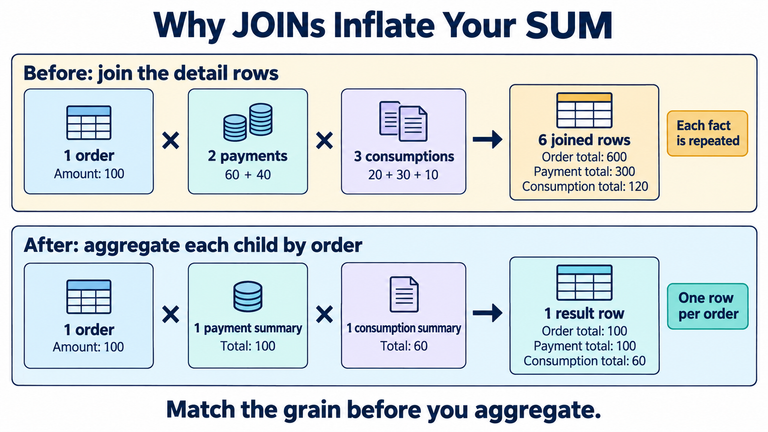
Learn why one-to-many JOINs inflate SQL totals, why SUM(DISTINCT) can lose valid amounts, and how to fix double counting with reproducible examples.
The first scaling problem in our student fitness platform appeared in Java memory. Schools uploaded Excel files containing thousands of students’ test results. Each row passed through parsing, validation, scoring rules, and evaluation logic. During concentrated uploads, several large tasks…
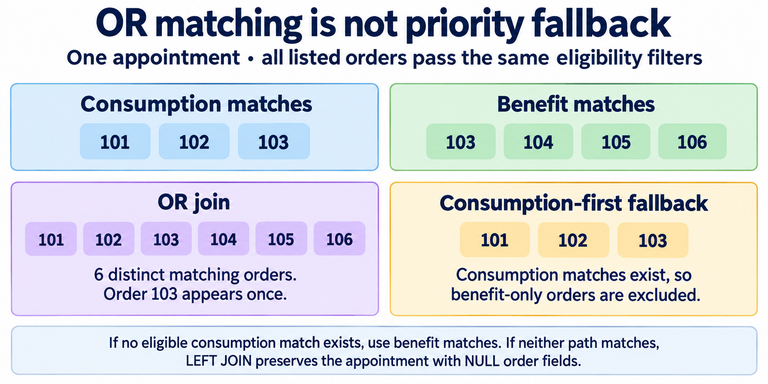
Learn how to distinguish OR matching from priority fallback, control row multiplication, and validate MySQL join rewrites with execution plans and semantic tests.